 Vantage
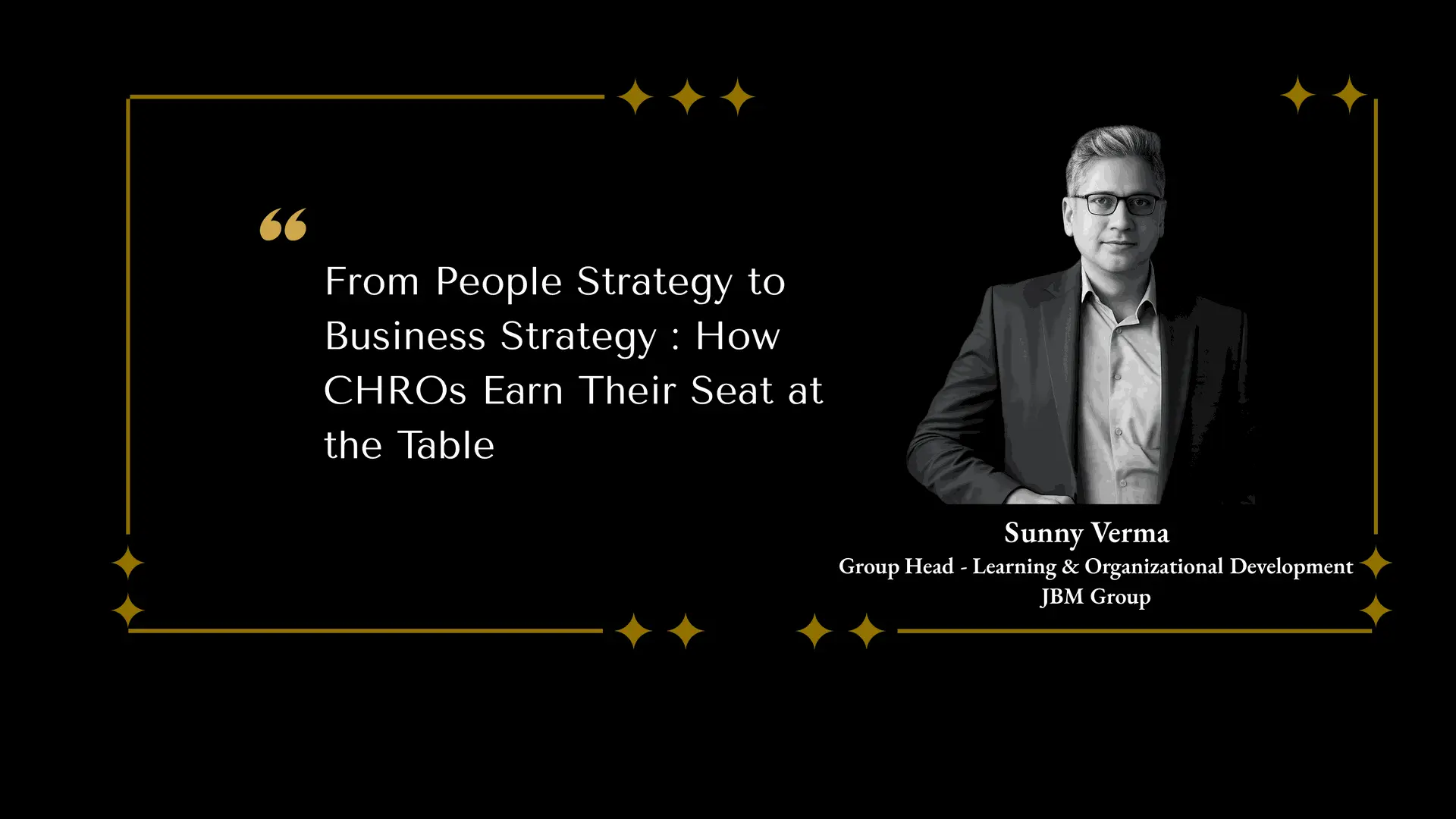
At the scale where HR decisions carry real P&L weight (roughly 1,000+ employees, by my experience) human capital constitutes the largest operating expense and the most volatile execution risk. Yet, the Chief Human Resources Officer (CHRO) historically struggled to command the same strategic authority as the CFO or COO. For decades, the HR function was viewed as an administrative back-office engine rather than a value-generating center.
The modern corporate landscape has altered this dynamic. Geopolitical volatility, rapid shifts in cost structures, talent scarcity, and complex executive compensation models have turned organizational design into a core business priority.
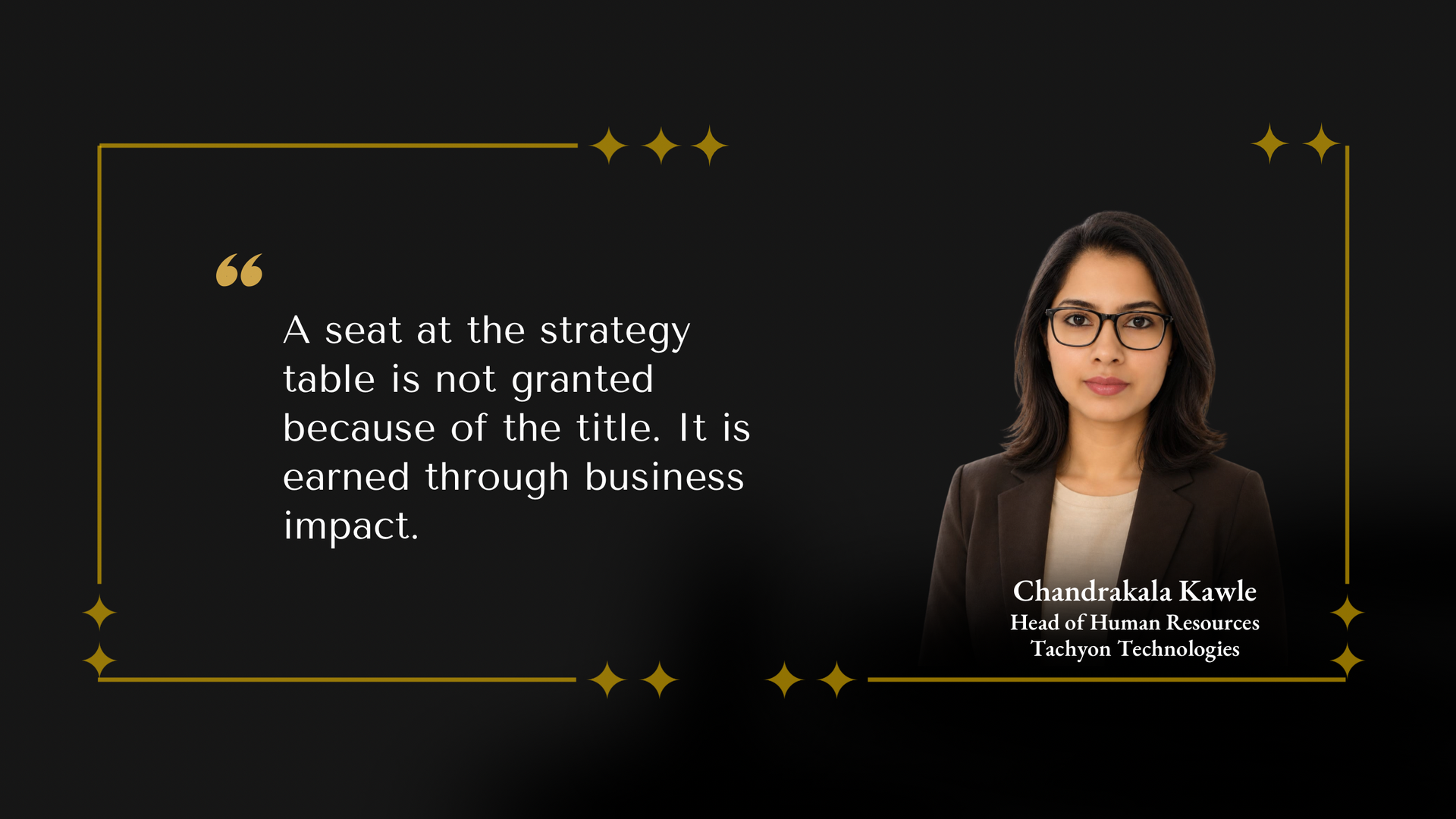
For a CHRO, earning a permanent seat at the strategy table requires moving past purely administrative frameworks. To hold that influence, an HR leader must translate talent metrics into business outcomes, manage complex board dynamics, build trusted partnerships with the CEO, and exercise structural power across the enterprise.
1. The Language of Power: Translating Talent into Enterprise Value
The most common mistake an HR leader can make at the executive table is speaking in human resources jargon. Concepts like "employee engagement," "wellness initiatives," and "cultural alignment" often fail to resonate with a CEO or CFO unless they are tied directly to financial performance or operational velocity.
To build real strategic influence, the CHRO must communicate using the language of business metrics and capital efficiency.
High-Impact Financial Frameworks
To align talent strategies with company-wide commercial goals, a strategic CHRO focuses on three core operational metrics:
- Revenue-per-Employee (RPE) Optimization: The CHRO treats headcount not just as a cost line item, but as a primary driver of operational leverage. As an organization scales headcount, RPE should ideally expand or hold steady through structural efficiencies. If RPE drops, the CHRO must step in to diagnose architectural issues, duplicate layers, or coordination bottlenecks.
- Time-to-Productivity (TTP) Compression: In knowledge-intensive scales, a new hire represents a net-negative cash investment for months. By tracking and shortening TTP through structured onboarding and onboarding tools, the CHRO directly improves the company's free cash flow.
- Span-of-Control Drag Analysis: Excess management layers slow down decision-making speeds and dilute corporate strategy. A business-minded CHRO maps organizational layers directly to margin health, identifying and addressing areas with too much overhead or overly flat reporting structures.
2. The Triad of Governance: Navigating Board Dynamics
At the 1,000+ employee threshold, the CHRO’s relationship with the Board of Directors—specifically the Compensation Committee and the Nominating and Governance Committee—is a critical source of organizational influence.
A strategic CHRO acts as an objective advisor to the board, helping balance executive compensation with long-term shareholder value.
Succession Planning Architecture
Board members frequently encounter sanitized, superficial succession charts presented as colorful slides that lack actionable depth. In my experience, a workable structure looks like this:
- The Three-Deep Rule: For every executive and critical technical role, the CHRO maintains three named successors: an emergency back-up (0–3 months), a medium-term successor (12–24 months with development), and a long-term strategic option.
- Asymmetric Risk Assessment: The CHRO clearly highlights flight risks among high-impact leaders, linking these talent vulnerabilities directly to potential product delays or market disruption.
- Objective External Benchmarking: Rather than assuming internal candidates are always ready, the CHRO regularly partners with search firms to benchmark internal leaders against top external talent, providing the board with clear, unbiased context.
Compensation Committee Leadership
Executive compensation is highly scrutinized by activist investors and regulators. The CHRO should steer the Compensation Committee away from simple peer group benchmarking, which can inadvertently inflate executive pay without driving performance.
Instead, the CHRO helps design incentive structures that tie executive rewards directly to long-term operational milestones, capital efficiency targets, and successful multi-year succession planning.
3. The CEO Confidant: Balancing Partnership with Objectivity
In my experience, the relationship between the CEO and the CHRO is uniquely complex. I've seen this go wrong when the CHRO defaults to being either an order-taker or a people-pleaser — the CEO is often isolated at the top of an organization, navigating pressures from investors, customers, and internal leaders.
The CHRO can add immense value by serving as a highly objective, trusted advisor who evaluates situations without personal agenda or operational bias.
Navigating the "CEO Bubble"
As companies scale, CEOs can become insulated from the operational realities of their teams. Mid-level managers and executives often filter information, sharing positive updates while downplaying structural roadblocks or cultural friction.
The CHRO breaks through this isolation by providing real, unvarnished insight into the health and velocity of the workforce. To do this effectively, the CHRO must avoid two common relationship traps:
- The Trap of the "Order Taker": If the CHRO simply executes headcount requests or policy decisions without challenging the underlying strategy or business assumptions, they forfeit their seat as a strategic peer.
- The Trap of the "People-Pleaser": If the CHRO filters or softens feedback about executive performance or organizational design flaws to avoid uncomfortable conversations, they lose the trust of both the CEO and the board.
The most influential CHROs balance genuine support for the CEO's vision with the willingness to step in when a strategic decision risks damaging organizational trust or performance.
4. Organizational Architecture: Designing for Maximum Velocity
Real organizational power is rooted in structural design. The CHRO holds authority by acting as the chief architect of the company’s operating model.
When an enterprise scales past 1,000 employees, coordination friction naturally increases, silos can solidify, and decision-making often slows down. The CHRO must proactively design structures that maintain speed and adaptability.
Deconstructing the Matrix Tax
Many scaled organizations default to complex matrix reporting lines that require employees to report to both a functional head and a regional or business-unit lead. While intended to foster collaboration, this approach often creates alignment gridlock and slows down execution.
In my experience, these are the principles that separate organizations that scale well from those that don't:
Design Dimension |
Fails at 1,000+ Scale |
Works at 1,000+ Scale |
Team Alignment |
Functional divisions that require frequent hand-offs. |
Cross-functional, autonomous teams focused on specific customer metrics. |
Span of Control |
Flat management structures with 15+ direct reports. |
Balanced ratios of 7 to 10 direct reports per people manager. |
Career Trajectories |
Forcing individual contributors into management for pay raises. |
Parallel career paths with equal compensation for ICs and managers. |
Decision Rights |
Multi-layered approval committees that stall progress. |
Clear guardrails and decentralized decision-making power. |
Holding influence at the executive table isn't a one-time achievement — it's a continuous discipline of commercial metric fluency, de-risked succession planning, and structural clarity. CHROs who master these areas don't just support the strategy table.
They earn a permanent seat at it.