 Vantage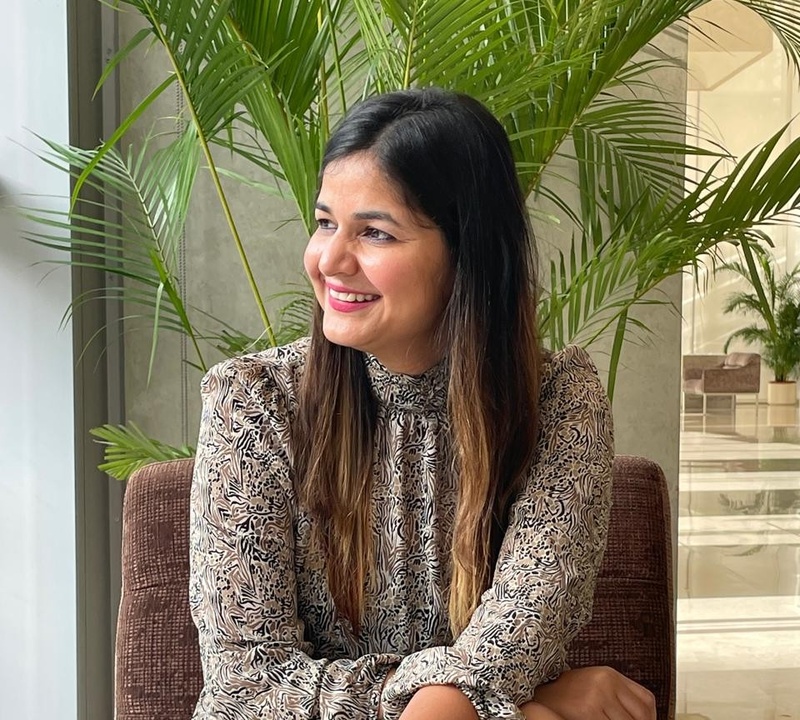
For almost two decades, I had a clear answer to the question: What do you do?
I was in financial services. I joined B&K Securities straight out of campus in 2006, built the corporate treasury and advisory business from scratch, worked with some of India's largest companies, and eventually became Deputy Managing Director. I never planned it as a long journey. It simply kept evolving.
And then I became a founder.
From the outside, it probably looked like a big career decision. From the inside, it felt like losing the map.
Back to the Beginning
For years, I had known the ecosystem, the language, whom to call and, importantly, what I was good at. Suddenly I was back at the beginning. Not professionally, but psychologically. I had to become comfortable being a beginner again, which is harder than it sounds when you have spent years becoming an expert.
As a corporate leader, I could walk into a room with credibility attached to my role. As a founder, I quickly realized that none of it was enough. Nobody cares that you were a senior executive if the product doesn't work. Nobody cares how good your presentation is if the customer doesn't see the value. And nobody cares how carefully you planned the strategy when something breaks on a Friday evening.
Everything becomes personal.
The product, the customer, the hiring and the cash flow are all your problem. The technology may not be yours to build, but understanding it suddenly is. I went from being responsible for a function and a business to feeling responsible for everything.
A Different Way of Thinking
The more interesting shift was in how I had to think. In a corporate environment, you can spend years mastering one craft. As a founder, you must become reasonably conversant in many at once: product, technology, marketing, investors, and the customer. Sometimes you even become a support executive, trying to understand why one user cannot see one piece of data. That last role can be surprisingly educational.
The most humbling discovery was that expertise does not automatically transfer. My years in financial services gave me context, relationships and a deep understanding of money. But building FOLO required a different skill: taking a subject I understood deeply and making it simple for someone who doesn't want to think about money all day.
It forced me to keep asking a question I had perhaps not asked enough earlier in my career:
Is this useful to the person on the other side?
Not Is it technically correct? Not Is it sophisticated? Not Can we build it? But Will someone actually use it?
That shift from expertise to usefulness has been one of the biggest lessons of my founder journey.
The Ego
Nobody really talks about this part. After years in a senior role, your identity becomes intertwined with your position. People know your designation and the institution you represent. Doors open because of the organization behind you.
As a founder, you start again. You explain what you are building, convince people to believe in something without a long history, and hear "no" far more often. Then you keep going anyway.
Surprisingly, this can be freeing. You stop trying to prove that you are the smartest person in the room. You start looking for the smartest person in the room. A young engineer may understand your product better than you do. A user may change your understanding of the problem. Someone in customer support may spot a friction point your entire leadership team missed.
You learn to listen differently. And, perhaps most importantly, you learn to say:
"I don't know. Let's figure it out."
For someone who spent years being expected to have the answers, that sentence takes some getting used to.
You Don't Start from Zero
I wish more people said this when they talked about career pivots: leaving a corporate career does not mean leaving your experience behind.
The years of managing people become useful when you are building a team of ten. The years of dealing with clients become useful when you are listening to your first hundred users. The years of navigating complexity become useful when you are simplifying something for someone else. The relationships built over decades become part of the foundation.
Your previous career doesn't disappear. You simply use it differently.
For me, the move from corporate leader to founder was not about becoming a different person. It was about becoming comfortable with a different version of myself: one with fewer answers, more questions, less certainty, more experimentation, and a much greater tolerance for getting things wrong.
The irony is that after so many years of building expertise, I now value curiosity even more. A founder's job is not to know everything. It is to keep asking the right questions, bring the right people into the room, decide with incomplete information, and keep moving when the answer isn't obvious.
I don't know if that is the most comfortable way to work. It certainly isn't the easiest. But I have come to believe that the most meaningful pivots aren't the ones where you change what you do. They are the ones where you change how you see yourself.
I went from building within an established institution to building one of my own. And the biggest lesson has been surprisingly simple:
You don't leave your experience behind when you become a founder. You finally get to find out what else it can build.