 Vantage
I have been looking at the recently released Renous GCC Sentiment Index 2026, and what caught my attention was not the headline score of 154. It was the story underneath the number. Seventy-four senior leaders participated in the survey, and the sentiment is clearly bullish:
- 76% expect AI budgets to increase,
- while 61% say their GCC mandate from global headquarters is expanding.
Yet the same survey reveals a fascinating paradox—AI ambition is accelerating faster than organisational readiness.
For me, this points to four important shifts in the way we should think about the future of India's GCCs.
1. The AI mandate is no longer the question. Execution is.
The old conversation in GCC boardrooms was: "Should we adopt AI?"
That conversation is rapidly disappearing.
The real question has become: "How fast can we operationalise AI within the constraints of an enterprise?"
The data is compelling.
- AI budget is at an index of 175,
- while 61% report an expanding HQ mandate.
- At the same time, 57% say AI is already deployed broadly or embedded in core operations.
The mandate is therefore coming from the top. But the friction is coming from the bottom. Legacy systems and regulatory/compliance requirements jointly emerge as the largest barriers at 49% each, followed closely by data quality at 47%.
This changes the leadership conversation. AI transformation in a GCC is no longer primarily an innovation problem. It is increasingly an enterprise engineering, architecture, governance and operating-model problem.
2. The biggest AI opportunity for GCCs may be inside the GCC itself
There is another fascinating signal:
- 47% of leaders believe engineering and technology will be the function most disrupted by Agentic AI,
- followed by customer operations at 34%.
In other words, the GCC may become the first customer of its own AI transformation.
This makes AIDLC—AI-driven development lifecycle—a particularly strategic playground.
Think beyond AI-assisted coding.
The next wave is about AI-native software engineering: agents that
- understand requirements
- generate architecture
- write and refactor code
- create test cases
- perform security analysis
- migrate legacy code
- manage documentation
- orchestrate deployment
And this is where Indian GCCs have a structural advantage. Many of them are fundamentally technology-led organisations with engineering talent,product knowledge and access to global technology stacks. Their most controllable AI laboratory may therefore be software engineering itself.
The opportunity is not simply to make developers 20% more productive. It is to redesign the entire software delivery system around AI agents.
3. The future GCC leadership model may need to converge technology and operations.
Here, I see perhaps the most interesting leadership implication.
- Only 8% of respondents say the GCC head has the greatest influence over AI adoption decisions.
- Thirty-eight percent point to global HQ mandate
- and 32% to the CTO/technology leader.
This creates an authority gap. The GCC is increasingly accountable for AI outcomes, but the authority, architecture decisions and technology governance may still sit elsewhere.
Could this accelerate the convergence of the traditional Operations and Technology leadership models? I believe so.
As AI moves from experimentation into enterprise execution, the boundary between operations and technology becomes increasingly artificial. Compliance, legacy modernisation, data architecture, AI governance, model risk, agent orchestration and cybersecurity are no longer back-office technology concerns—they directly determine perational performance.
The next-generation GCC leader may therefore need to be less of an operations administrator and more of an enterprise technology orchestrator.
4. And then comes the unanswered question: where is the AI money actually going?
This is the question I would add to the next edition of the survey.
The data tells us that
- 76% expect AI budgets to rise,
- while 41% expect headcount to remain flat or decline.
That strongly suggests a shift from people-led scaling toward technology-led productivity.
But what exactly is absorbing that incremental AI investment?
- Is it hyperscaler consumption and compute?
- AI platforms and foundation-model access?
- Agentic engineering platforms?
- Legacy modernisation?
- Data infrastructure?
- Cybersecurity and Responsible AI?
- Product development?
- Or perhaps marketing and customer experience?
The distinction matters because AI budget allocation is becoming a proxy for the future identity of the GCC itself.
- If most incremental spend goes into engineering platforms and AI infrastructure, GCCs will increasingly become AI engineering powerhouses.
- If it flows into product innovation, they become global product centres.
- If it flows into operations, they become autonomous service engines.
- And if the investment cuts across all three, we may finally see the emergence of the AInative GCC.
That, to me, is the real story behind the Renous number of 154.
The next chapter of India's GCC journey will not be defined by how many people we employ, how many pilots we run, or how many AI tools we procure.
It will be defined by one question:
Can we redesign the enterprise around AI—technology, operating model, governance and leadership together?
Because the AI mandate has already arrived. Now the GCC needs the AI muscle to execute it.
About Author
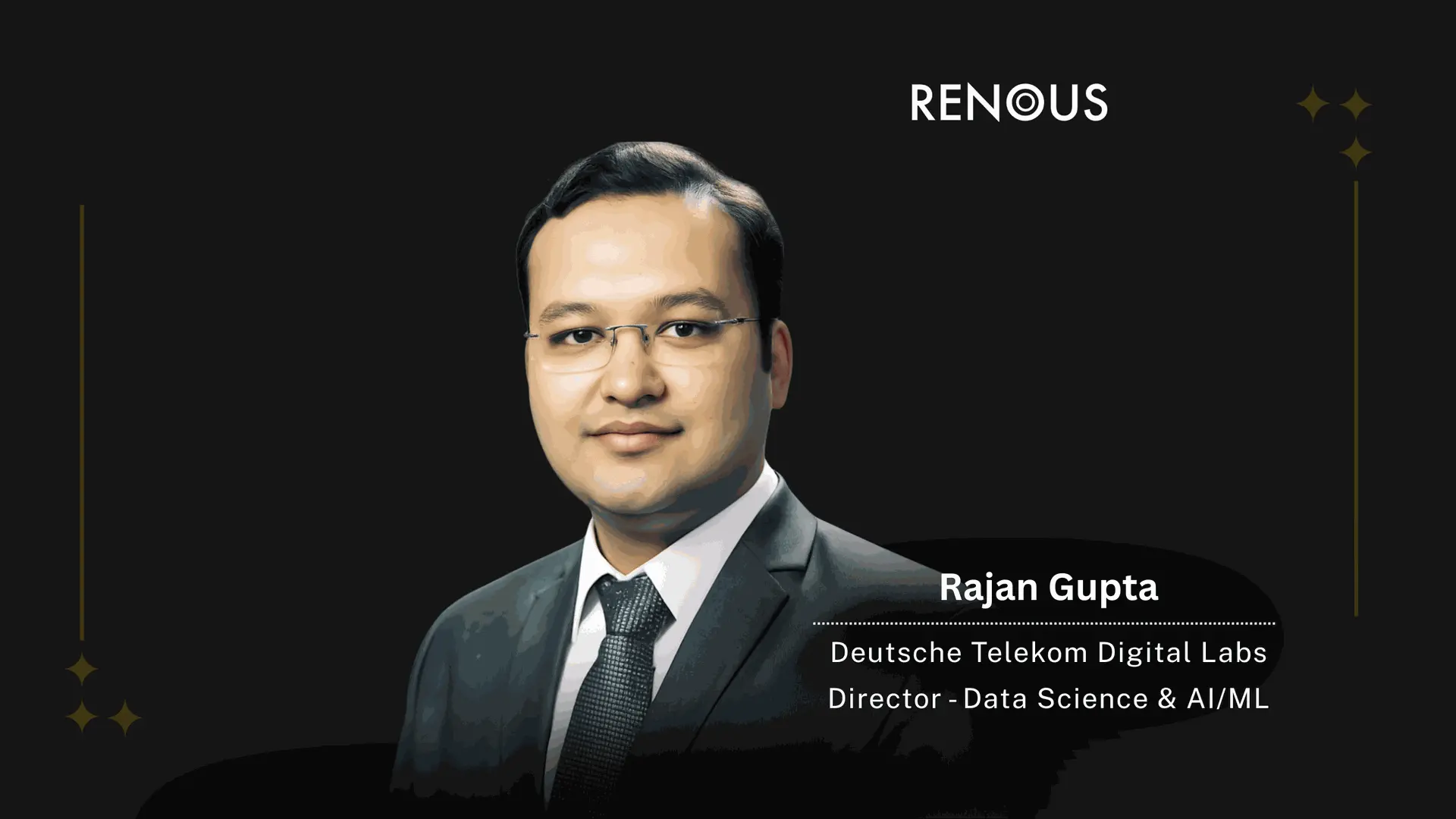
Dr. Rajan Gupta is an Enterprise AI and Data Technology leader with 16+ years of global experience shaping AI strategy, leading data-driven transformation, and building enterprisescale AI products and digital platforms across industries, including Fortune 500 organisations. Over the past five years, AI products and platforms built under his leadership have processed 25+ million transactions, demonstrating the ability to translate AI from experimentation into measurable enterprise impact. His expertise spans Generative AI, Agentic AI, enterprise data platforms, AI product engineering, analytics, and responsible AI adoption. A recipient of multiple industry recognitions, Dr. Gupta is among India’s early Certified Analytics Professionals (CAP®) within the INFORMS global community. He holds a doctorate and post-doctorate in Artificial Intelligence, three master’s degrees, and has authored 125+ research publications, including eight books. He serves as a Visiting Researcher at the AI&I Lab, UAT, Mexico, and has contributed to the UN E-Government Development Index (EGDI 2020). Beyond corporate leadership, he actively contributes to the global AI ecosystem as a startup investor, keynote speaker, AI career coach, reviewer, and academic and industry advisor. His mission is to harness AI to positively impact and improve the lives of one billion people through responsible, scalable and human-centric innovation.
Find him on LinkedIn : Rajan Gupta