 Vantage

The Wrong Question
Ask a technology SME what a GCC wants from it, and the answers arrive quickly. More developers. A lower price. One more impressive AI demonstration. I have sat on the buying side of that table, and my honest answer is that, increasingly, it is none of these by themselves.
The GCC itself has changed. Once judged for cost, capacity and execution, it is expected to solve important problems, redesign how work gets done and build capabilities the wider enterprise does not yet have. AI is accelerating that shift. But an AI model does not repair a broken process, clean fragmented data or settle who owns what. That is where the opening for smaller firms begins, and it is the argument of this piece. The biggest opportunity for an SME is not to become an AI company. It is to become an enterprise-ready problem solver.
“AI is not the use case. The business problem is the use case.”
From SLA to Outcome
For years, success meant completing our part of a process within the agreed SLA. That is necessary, but the world has moved beyond SLAs, because the business does not experience our SLA. It experiences whether the employee joined on time, whether the purchase order was released, whether the vendor was paid. At Adani, we are looking past isolated activities toward value chains such as hire-to-retire, source-to-pay and invoice-to-payment, with clearer ownership and joint governance.
Take vendor payments. A GCC could define its job as invoice processing: receive, validate, post, meet the SLA. The vendor sees none of those stages. The vendor sees one outcome: was I paid correctly and on time? That outcome depends on the business confirming receipt of goods, procurement getting the PO right, master data being accurate, approvals arriving on time, the GCC processing the invoice and treasury releasing the payment. Optimizing only the step we control cannot improve the experience. Someone must examine the whole journey, find the handoffs and make ownership visible across them. Touchless invoicing, automated validation and exception prediction help enormously, but the transformation is not the technology. It is getting an entire chain to work toward one result.
The same logic changes how we think about growth. We are now moving from how many more people we need for additional volume to how much more volume the same capability can absorb through simplification, standardization and automation. Across Finance, HR and Procurement, our transaction volumes grew approximately 1.3 times year on year while budget and headcount stayed broadly flat. No AI model delivered that on its own. Process discipline created the room in which technology could work.
“Do you sell an AI capability? Or own a business problem.”
Confidence is the Currency
A strong demo is a good start. But what really matters is whether the customer feels confident putting a real business problem in your hands. In one of our evaluations of two workforce-analytics vendors, both products had the features we required. One provider still stood apart. It raised NDA and information-security discussions early, arrived with a defined rollout plan, kept a regular governance rhythm, built dashboards progressively, trained our people and closed the pilot formally. The difference was confidence in execution, not only functionality.
So, my advice is simple: do not make the GCC project-manage the vendor. Size is not the same as maturity. A 50-person company can look entirely enterprise-ready if it brings an accountable owner, a repeatable approach, backup beyond one founder or one expert, and honest reporting of risk. A far larger company can look immature if the customer has to drive every action. GCCs may buy innovation, but they scale only where they see readiness and ownership.
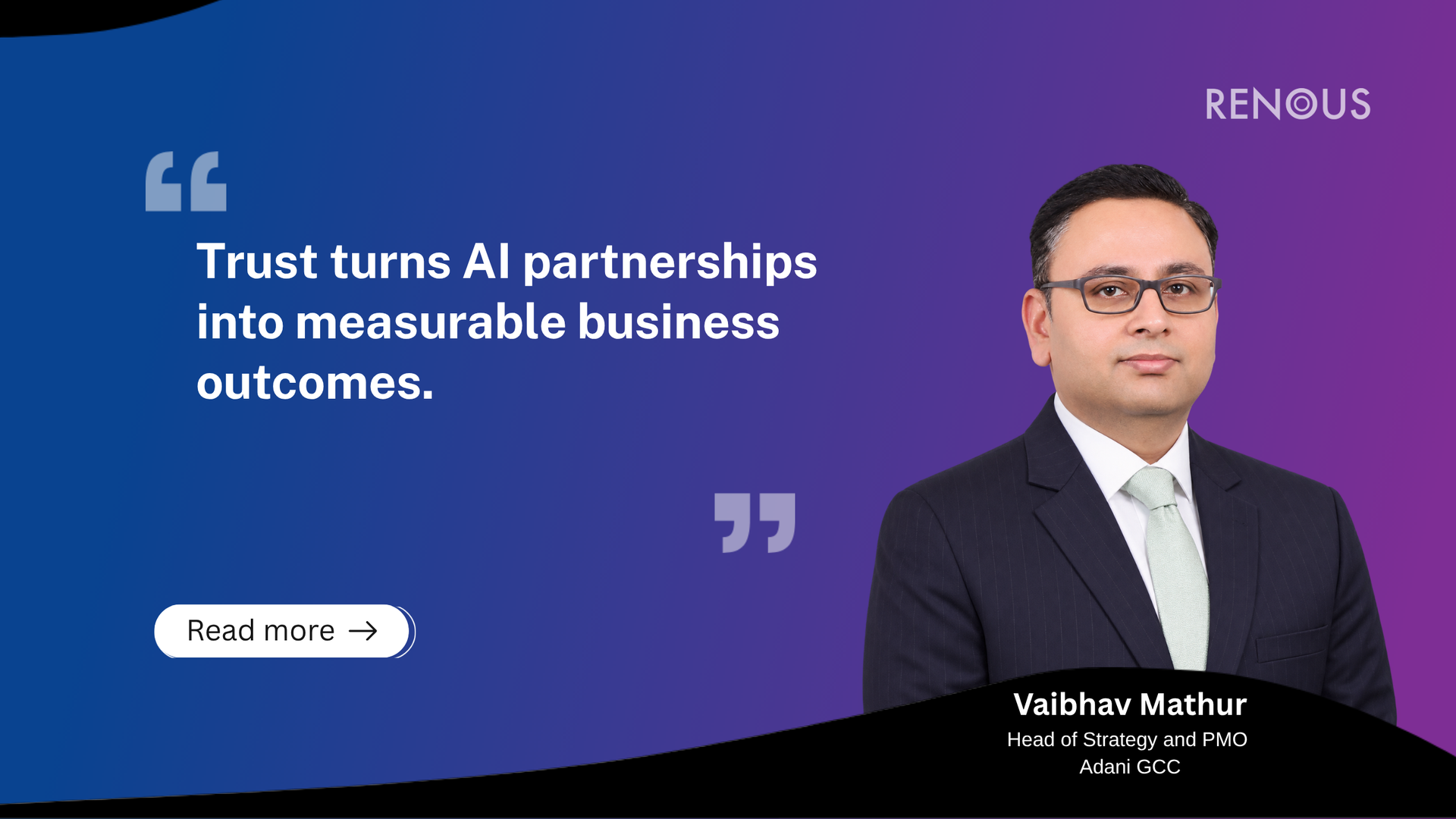
“GCCs may buy innovation, but they also buy confidence.”
Where SMEs Can Win
Three places stand out. The first is domain depth. A firm that works repeatedly in manufacturing, energy, logistics or finance in a region like Gujarat learns operating conditions, exceptions and user behavior that a generic provider may take months to learn. That is domain intellectual property combined with technology, and it is worth more than coding capacity.
The second is the next generation of GCCs. ANSR's November 2025 report counts more than 610 emerging enterprises with GCCs in India as of September 2025 and says 64 per cent of the new GCCs in that segment set up since 2020 were PE-backed. Such centers often need specialist capability quickly and may be more open to a focused partner.
The third is ecosystems. No SME needs to offer everything. Specialized firms, academic institutions and technology partners can present a stronger proposition together. And a firm should be willing to choose: one narrow business problem, solved exceptionally well, will carry further than a wide portfolio of AI services.
“Move the conversation from ‘What will you deliver?’ to ‘What will improve?”
What Buyers Owe in Return
Buyers have homework too. We cannot ask for start-up speed while putting SMEs through an operating model designed for large, established vendors. This means control standards and security standards. It means proportionate governance, shorter decision cycles, modular contracting and stage-gated investment. It also means designing pilots with production in mind, agreeing the baseline, the success measures and the production requirements at the outset, along with an explicit decision to scale, redesign or stop. The best pilot may be the one we end early.
Partnership needs honesty about risk as well. If a GCC keeps all the upside and transfers every risk to the SME, that is procurement, not partnership. The contributions need not be financially equal, but the commitment must be mutual. A vendor delivers what is asked. A strategic partner is willing to say we are solving the wrong problem, and we, as buyers, must give it the context and the permission to say so.
“Mutual commitment, not equal contribution, makes a partnership.”
A Fair Objection
A small firm, the argument goes, cannot match the controls, continuity and scale of a global provider. Some cannot, and they should say so rather than overreach. But the objection assumes that enterprises want everything from one supplier. When technology shifts every few months, scale alone is not enough. Enterprises also need focus, speed and people who understand a problem well enough to challenge the first answer.
The Opportunity Ahead
For years, smaller firms believed that winning a large enterprise meant looking larger than they were: a bigger team, a longer capability deck, a wider list of services. The opportunity now runs the other way. The firms that win will not say, "We can do everything." They will say, "We understand this problem. We know why it matters. We can solve it securely. And we are willing to be measured by the result."
Choose one important problem. Build the trust required to enter the enterprise. Prove value in the real world. Then stay long enough to make it scale. The future will not belong only to those with the largest teams or the most advanced technology. It will belong to those who turn technology into trust, and trust into outcomes.
Fix foundations. Choose a value chain. Build trust. Prove and scale value.