 Vantage

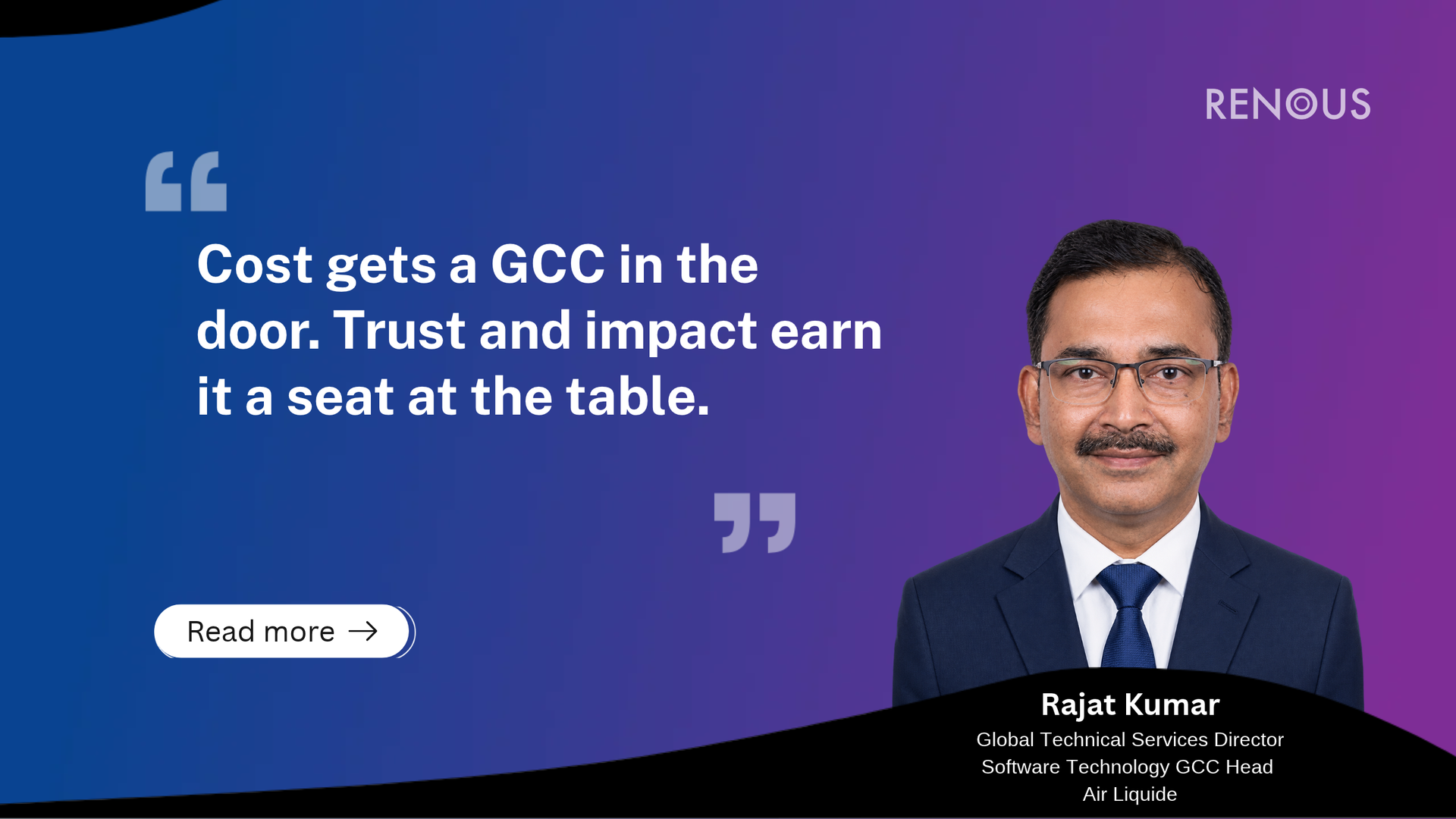
When I first took on the role of Global Technical Services Director with the responsibility of setting up a Global Capability Center (GCC) in India, the goal seemed straightforward on paper: migrate work from our high-cost centers in Europe, build a scalable setup, and drive technology adoption. But setting up a successful GCC is never just about transferring tasks or cutting costs. It is about building trust, proving capability, and eventually shifting the center's perception from a "cost-saving hub" to a "strategic innovation partner."
Whether you are building a new GCC team, working at the Head Office (HO) trying to understand your global partners, or consulting in this space, here is what I have learned about making a GCC truly successful.
The First Team Makes the Lasting Impression
When you start a GCC, the Head Office is often operating in the dark. They might not be fully aware of the rich capabilities and skills available in your region, and naturally, they want to assess the waters first. Your pioneer team is critical. They aren't just proving that the GCC can do the work; they are proving that the GCC is a cultural fit. The HO wants to know if your team understands their work culture, communication style, and values.
The first impression your core team makes will set the tone for all future investments and migrations.
Be an Extended Team, Not a Replacement Team
One of the biggest hurdles in migrating work from regions like Europe is the underlying fear of replacement. The GCC must position itself—and genuinely act—as an extended team. The goal is to show how you can add unique value and capacity to the global organization, rather than simply taking over someone else's job. When the HO sees you as partners who are there to help them scale and succeed, walls come down and real collaboration begins.
Embrace Empathy and Collaborate—Do Not Compete
It can be tempting for a new, eager GCC team to want to prove themselves by working faster or boasting about cost efficiency. This is a mistake. The GCC team must show empathy and a willingness to complement the HO team, not compete with them. Coming across as "over-smart" or constantly highlighting that you can do the same work for less money breeds resentment.
When the HO team feels supported rather than threatened, they become your biggest advocates.
Instead, focus on shared goals.
Show the Impact, Not Just the Value
Cost savings (value) are often the initial business case for a GCC, but they shouldn't be your long-term identity. To build standing beyond cost, you need to showcase impact. Impact looks like faster problem resolution, improved processes, better customer satisfaction, or a more stable operational environment.
When you fix a broken process or deliver a project that makes the global company better, you elevate the GCC from a vendor-like entity to a critical business pillar.
Impact Opens the Door for Innovation
Once you consistently deliver high-impact results, the dynamics change. The Head Office begins to trust the GCC with the "big things." This is when you see the mandate widen. For us, building that initial trust allowed us to start leading new technology evolutions—like setting up specialized labs and driving AI innovations across the company.
You cannot demand to work on cutting-edge innovation on day one; you earn the right to innovate by mastering the fundamentals and delivering undeniable impact first.
My Personal Learnings on the Journey
Building and scaling a GCC is a deeply human endeavor. Here are the core personal principles that helped me navigate this journey:
- Learn the culture inside out: Taking the time to deeply understand the working ways and culture of the HO is the ultimate shortcut to seamless integration.
- Build one-on-one human relationships: Work relationships are transactional; human relationships are resilient. Whenever possible, spend time with HO colleagues in person—whether you visit them or host them. Sharing a coffee or a meal builds the mutual trust that makes difficult projects easy.
- Stay highly flexible: The global business environment changes rapidly. Be open to pivoting your strategies, as these changes are often disguised opportunities for the GCC to take on new responsibilities and grow.
- Find the balance (Don't be a "yes man"): Do not aggressively impose your way of doing things, but don't just blindly agree to everything either. Go with the flow of the global organization, but maintain the courage to share your expert perspective when you know there is a better way.
A Final Reflection
Ultimately, a successful GCC is one that starts as a cost-efficiency initiative but grows into a cornerstone of global strategy, driven by empathy, impact, and a relentless focus on shared success.
This reflects my personal experience, and these principles helped me successfully navigate our GCC's evolution. What began primarily as a cost-arbitrage initiative has grown into a deeply strategic partnership. Today, our mandate has widened to the point where I have taken on the additional role of AI Global Coordinator for the Engineering and Technology Unit’s Digital and IT team.
This incredible journey—from cost center to global innovation partner—would never have been possible without the unwavering trust and support from our Head Office.