 Vantage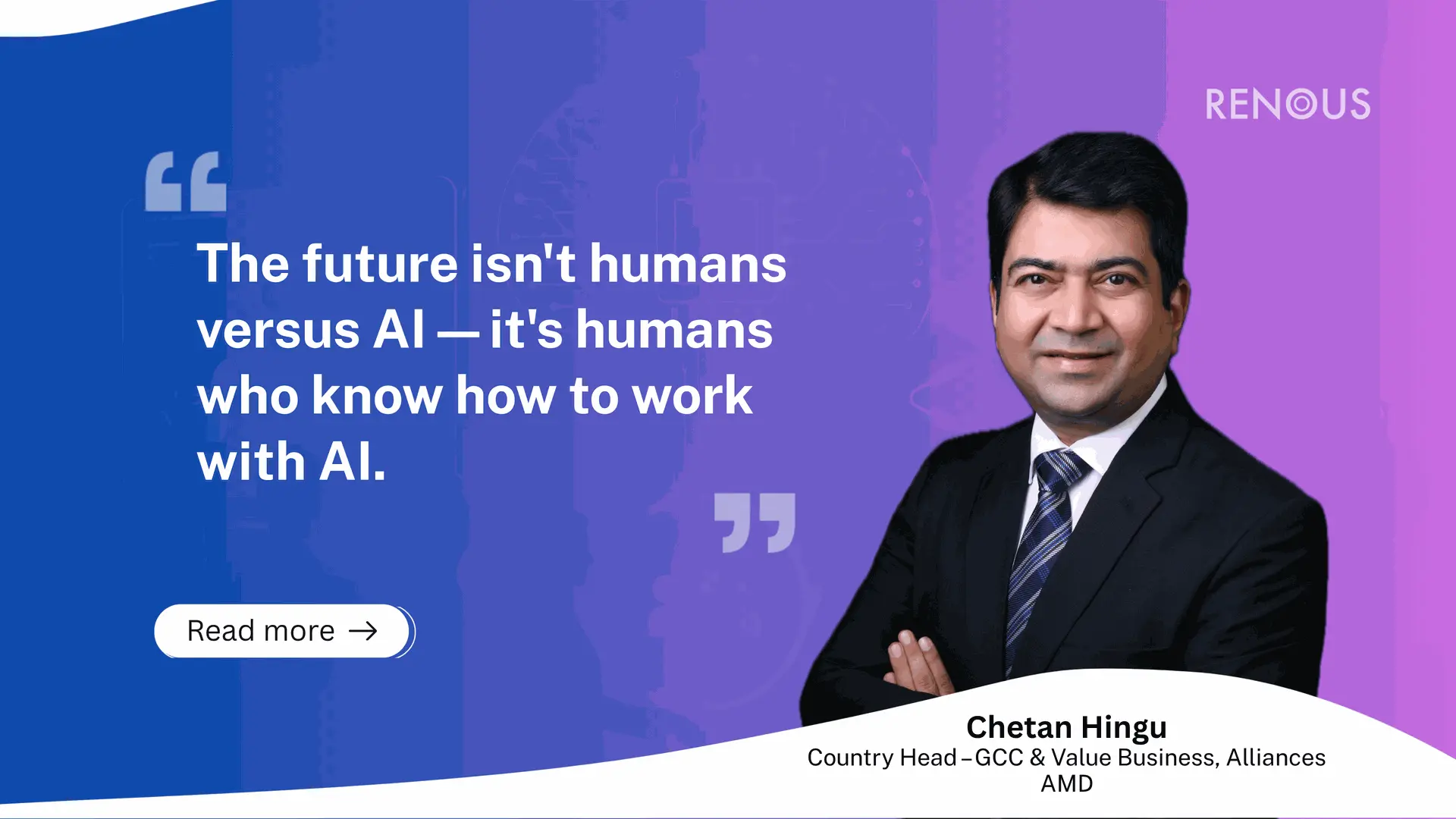
Artificial Intelligence has grown exponentially over the past few years and today touches almost every aspect of our lives—from the moment we wake up until we end our day. While AI feels like a recent phenomenon, the idea itself is not new. The term "Artificial Intelligence" was coined by John McCarthy at the Dartmouth Conference in 1956, with the vision of building machines that could perform tasks requiring human intelligence. Since then, AI has evolved through several phases, but the last few years have accelerated its adoption like never before.
I first heard a compelling explanation of AI in 2015 during a technology conference. The speaker described a driverless car moving down a road when suddenly a ball bounces across its path. The ball itself is no longer an obstacle, so the car may continue driving. A human driver, however, immediately thinks one step ahead: "If a ball has crossed the road, a child might be running after it," and instinctively slows down. The speaker's point was simple yet powerful—AI becomes more intelligent only when it is trained on enough real-world scenarios to anticipate situations rather than merely react to them. That example has stayed with me ever since because it captures the essence of machine learning.
Fast forward to today, and AI has moved far beyond experimentation. We started with AI assistants that helped us search, summarize and create content. We are now entering the era of Agentic AI, where AI systems can plan, reason and execute multi-step tasks with minimal human intervention. This shift is fundamentally changing how work gets done.
Many repetitive and labour-intensive activities are already being automated. Teams are spending less time on routine work and more time on decision-making, creativity and solving complex business problems. The professionals who are learning how to work alongside AI—rather than compete with it—are becoming significantly more productive. While it is true that some organizations are reducing certain roles in the name of AI, the overall impact is more nuanced. AI is changing the nature of work far more than it is simply replacing work.
We are already seeing this transformation across industries. Education is using AI to personalize learning. Software development is accelerating through AI coding assistants. Financial services are improving fraud detection and customer insights. Healthcare is assisting doctors in diagnosis and drug discovery. Agriculture is enabling precision farming. Governments are investing in Sovereign AI to build national AI capabilities. At the same time, startups around the world are building domain-specific Large Language Models that are redefining how organizations operate.
Another area where AI is making a visible impact is Total Customer Experience. It has moved well beyond chatbots. AI is now supporting the entire customer journey—from discovery and product recommendations to purchase, onboarding, customer support, retention and even advocacy. Organizations are no longer asking where AI can fit; they are redesigning customer experiences around AI.
"There's a line often attributed to Victor Hugo that has stayed with me since my management studies days: 'You can't stop an idea whose time has come.” AI is one such idea. It is no longer something we are preparing for—it is something we are already living with. It is changing how we work, how we make decisions and how organizations operate. Rather than viewing AI as a replacement for human capability, I see it as an amplifier of human potential. If we allow AI to take over repetitive tasks, we can devote more time to innovation, strategic thinking, creativity, and meaningful work.
The future of work will not be defined by humans versus AI. It will be defined by humans who know how to work effectively with AI.
About Author
Chetan is a seasoned business leader with over 25 years of experience in the corporate sector. His career spans Enterprise Sales, Channel Sales, Inside Sales, Category Management with P&L ownership, and Strategy & Alliances, where he has driven business growth and built high-impact partnerships.
Find him on LinkedIn: Chetan Hingu
Disclaimer from Renous
The opinions expressed in this article are those of the guest author and do not necessarily reflect the views of our publication. The information provided in this article is for general informational purposes only and should not be considered as professional advice. The reader should always conduct their own research and due diligence before taking any action based on the information provided in this article.