 Vantage
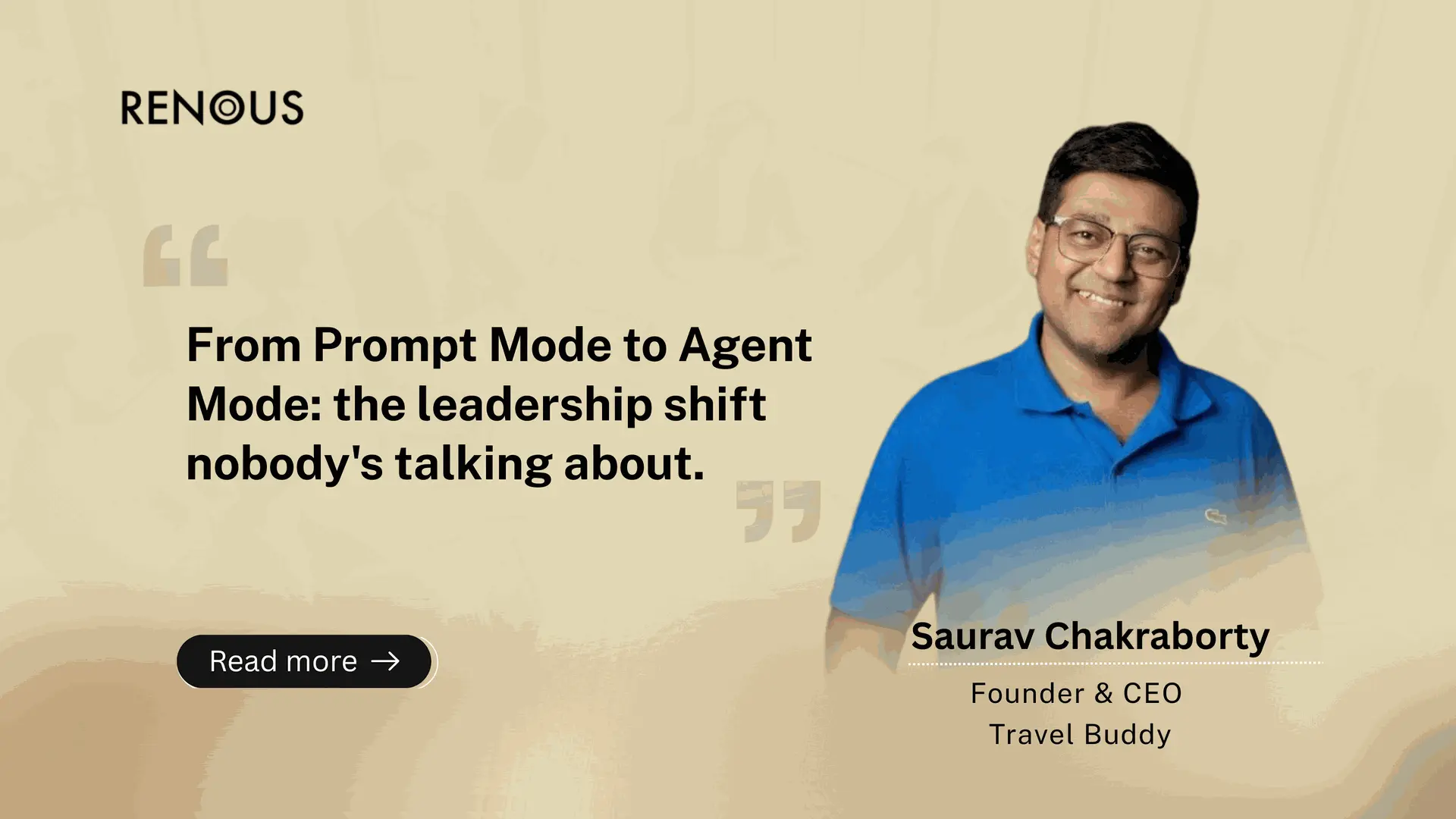
Six months ago, I had a confession to make to myself: I was using AI the way most executives do — one prompt, one answer, close the tab, repeat tomorrow. I was getting utility out of it. But I wasn't getting leverage.
I've built Travel Buddy from scratch — 500,000 active users, 5,000+ trips (as reported by the company, June 2026), an entire community marketplace — and I was still treating the most powerful technology of our generation like a search engine with better grammar.
That changed. And what I learned on the job — not from a course, not from a conference keynote — is what I want to share here.
The Real Problem with How Leaders Use AI
Research on executive time use consistently shows the same pattern: the overwhelming share of a CEO's week disappears into meetings and repetitive work. Most leaders I speak to recognize it immediately, because they're living it. We know this. We've lived it.
The question isn't whether you're busy. It's: what can your AI team take off your plate — and what can it speed up for you?
Most leaders I speak to are stuck in what I call Prompt Mode: ask a question, get an answer, forget it happened. There's nothing wrong with it — but it's the equivalent of hiring a brilliant analyst and only ever asking them for directions. The real capability is relational, contextual, and cumulative. It compounds.
What I Actually Built in Six Months
Let me be specific, because specificity is where credibility lives.
- My own website — built from scratch, zero code, zero agency, live on Google.
- A Virtual EA — a sales performance report lands in my inbox before every Monday morning call. No manual pulling of data. No analysis paralysis.
- A step change on critical tasks — in our own business, work that used to take my team 6 to 7 hours now takes fifteen minutes. That is the scale of change we are talking about.
- An AI Investment Banker — it builds target lists, writes personalized outreach, and has helped automate my fundraising pipeline.
The 6-to-7-hour task deserves its own paragraph. We had a corporate client: 70+ flight tickets across 25+ cities for a single event. The normal process — open B2B travel portals one by one, pull rates manually, build an Excel sheet — would consume a full working day. My team was always reluctant to take these on because most corporate deals fall through anyway. With AI, the entire brief was done in fifteen minutes. No competing travel agent could match that turnaround. Speed became our competitive advantage.
The Shift: From Transactions to a Working Relationship
The mental model I keep coming back to is this: most executives treat AI like a vending machine. One transaction, no continuity, no compounding value. The future belongs to those who treat it like a trusted colleague — one that knows your goals, your tone, your past decisions, and builds context over time.
In Prompt Mode, you work for the AI — you keep crafting better questions from scratch. In Agent Mode, the AI works for you — it already knows your business.
Practically, this means giving your AI system permanent memory of your business: your voice, your clients, your pricing philosophy, your standing instructions. Every output then starts not from zero, but from context.
The Framework I Use: PRIME
Getting consistently great output from AI requires a structured approach. The PRIME framework is adapted from content by TheMITMonk, one of my favorite YouTube creators focused on practical AI applications.
I have tested it in my own business and use it consistently:
- Purpose — What is the exact job to be done? What does 'done' look like?
- Research — What data should the AI look at? Emails, documents, live web pages?
- Interview — Ask the AI to interview you with pointed questions before it starts. In my experience, this single step removes most of the back-and-forth that bad AI output creates.
- Mechanics — What format should the output take? Email, deck, table, narrative?
- Example — Show it what 'great' looks like. Attach a sample. The quality jump is immediate.
I use PRIME for everything from investor outreach to weekly team mailers. It removes ambiguity, which is the single biggest source of bad AI output.
Building Your AI Team
Think less about 'using AI' and more about building an AI team. Mine currently has four members:
- The AI Strategist — researches markets and competitors. Comes to every meeting with a brief already prepared.
- The AI Operator — handles reports, workflows, and follow-ups. Runs the routine so I can run what matters.
- The AI Growth Hacker — tests copy angles, finds distribution gaps, and never stops experimenting.
- The AI Researcher — surfaces insights and summaries in minutes. Comes in before I talk to any investor or partner.
None of this requires a technical background. I don't write code. I built my entire website without touching a single line. The barrier is mindset, not skill.
The Questions Every Leader Should Be Asking Right Now
Not 'Should I use AI?' — that question is settled. But:
- What is the most time-consuming recurring task in your week — and can an AI agent own it?
- Which workflows in your organization require one team to wait on another — and could an AI bridge that gap in real time?
- What would a 10x version of you do differently this week — and what's stopping that from happening today?
The Agent Era is not a future event. It's already here. The leaders who build their AI teams now will not just work faster — they will operate in a different category entirely.
About Author
Saurav Chakraborty is the Founder & CEO of Travel Buddy (beatravelbuddy.com), a community travel marketplace with 500,000 active users (as reported by the company, June 2026). A former executive at Meta and Clear trip, he is also the author of The Art & Science of Pivoting and the co-creator of The Pivot School, a coaching and workshop venture for founders and operators.
Find him on LinkedIn: Saurav Chakraborty
Disclaimer from Renous
The opinions expressed in this article are those of the guest author and do not necessarily reflect the views of our publication. The information provided in this article is for general informational purposes only and should not be considered as professional advice. The reader should always conduct their own research and due diligence before taking any action based on the information provided in this article.