 Vantage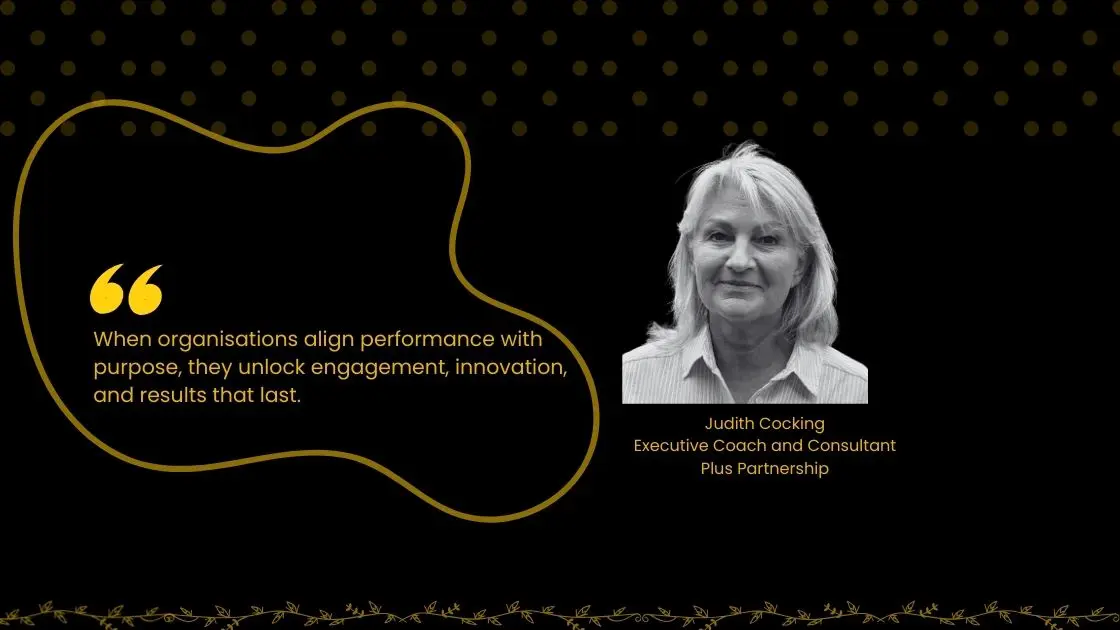
Most organisations understand the importance of goal setting—but many still get it wrong.
Instead of inspiring long-term progress, goals are often reduced to a checklist of short-term tasks, quarterly KPIs, or metrics that measure busyness more than impact. The result? Teams that are productive on paper but disengaged in practice.
Let’s explore the most common goal-setting mistake—and how managers can flip the script to build more motivated, high-performing teams.
The Trap of Short-Term Thinking
It’s easy to get caught up in immediate outcomes: sales numbers, deadlines, deliverables. But focusing solely on short-term goals leads to reactive, tactical behaviour. Employees end up chasing what’s urgent, not what’s important.
Research from McKinsey & Company shows that organisations with a long-term orientation outperform their peers by as much as 47% in revenue and earnings over a 15-year period (Barton et al., 2017). Yet despite this, many teams remain stuck in quarterly cycles, never carving out space for strategic, purpose-driven planning.
Meaning Drives Motivation
Psychologists Edwin Locke and Gary Latham have long argued that specific and
challenging goals improve performance (Locke & Latham, 2002). But there's a catch: goals only work when they are personally meaningful.
When people understand how their work connects to something bigger, they don’t just comply—they commit. Gallup’s 2019 State of the American Workplace report found that engaged teams were 21% more productive and 22% more profitable than their disengaged counterparts.
This motivation isn’t sparked by micromanaged metrics—it’s sparked by purpose.
The Power of Aspirational Goals
Too many managers focus only on what their teams need to do, not who they want to become.
Aspirational goals—such as launching an innovative project, mastering a skill, or
contributing to a larger mission—tap into intrinsic motivation. According to Harvard Business Review (2020), teams encouraged to set ambitious, future-focused goals showed higher motivation and greater innovation in their problem-solving.
Aspirational goals shift the mindset from “What’s on my to-do list today?” to “What impact do I want to create over time?”
What Great Managers Do Differently
High-performing managers don’t just assign goals—they co-create them. They ask their teams:
- What do you want to be proud of six months from now?
- How can your work help move the needle—for the company and for your own growth?
- What would an ambitious but meaningful goal look like for you?
By guiding this kind of thinking, managers foster both accountability and autonomy—two core drivers of performance.
Moving From Metrics to Meaning
If you want your team to thrive, it’s time to think beyond the next milestone.
Encourage long-term thinking. Set goals that matter. Make space for aspiration.
When organisations align performance with purpose, they unlock engagement, innovation, and results that last.
References
- Barton, D., Manyika, J., &Williamson, S. (2017). Measuring the economic impact of short-termism. McKinsey & Company.
- Locke, E. A., & Latham, G. P. (2002). Building a practically useful theory of goal setting and task motivation. American Psychologist, 57(9), 705–717.
- Gallup. (2019). State of the American Workplace Report.
- Harvard Business Review. (2020). How setting ambitious goals leads to higher innovation.
About Author
Judith Cocking is an experienced Executive Coach and Learning & Development Consultant at Plus Partnership based in UK. She specializes in HR, leadership development, and one-on-one coaching sessions that empower individuals and organisations to build resilience and long-term growth strategies.
Find her on LinkedIn: linkedin.com/in/judithcocking
Disclaimer from Renous
The opinions expressed in this article are those of the guest author and do not necessarily reflect the views of our publication. The information provided in this article is for general informational purposes only and should not be considered as professional advice. The reader should always conduct their own research and due diligence before taking any action based on the information provided in this article.
💼 Want in? Join our free HR broadcast channels:
- WhatsApp Community: WhatsApp Channel
- SIG Global HR Leaders Community: Global HR Leaders