 Vantage

Old views of business, new expectations
Shekhar Gupta wrote in his column in ThePrint in October 2026 that “We undermine our national interest…. by dismissing our entrepreneurs as exploiters, not builders of India.” Rooted in that statement (where he argues in favor of US Secretary of State Marco Rubio having visited the Reliance refinery in Jamnagar that month) are socialist era perceptions that industry will not act in social interest – and needs prescriptive regulations and pronounced compliance.
But it is different in the modern era. Now, most financial markets pundits speak overtly about the importance of Purpose in the creation of good, clean, highly valued businesses. Former Unilever CEO Paul Polman proved that business can profit through purpose. During Polman’s 10 year tenure ending in 2019, Unilever’s value grew 290% - even as he proudly claimed that “how you make money is more critical than how much you make.”
That became the rallying cry in the post pandemic world.
This is a simple statement which suggests that companies now realize that ecology and economy are not antithetical to each other. In fact, the best valued businesses talk about the importance of “shared prosperity”.
Trust as the driver of engagement
In workplaces and among workforces, the big change in the way we work post the pandemic – is the question: “what drives pride (for colleagues)”. As per the Salesforce (State of the Connected Customer), building trust is vital for organizational performance, with Indian customers stating that trust becomes even more important during times of change and many Indian employees trusting their organization to put employee interests ahead of profits. Edelman’s study specifically suggests that business consistently ranks as a highly trusted institution in India, with high levels of public confidence in domestic enterprises.
When three of the five primary stakeholder groups - customers, partners and employees - call out the value of Trust as the primary driver of engagement with business… the role of compliance needs to be seriously re-thought.
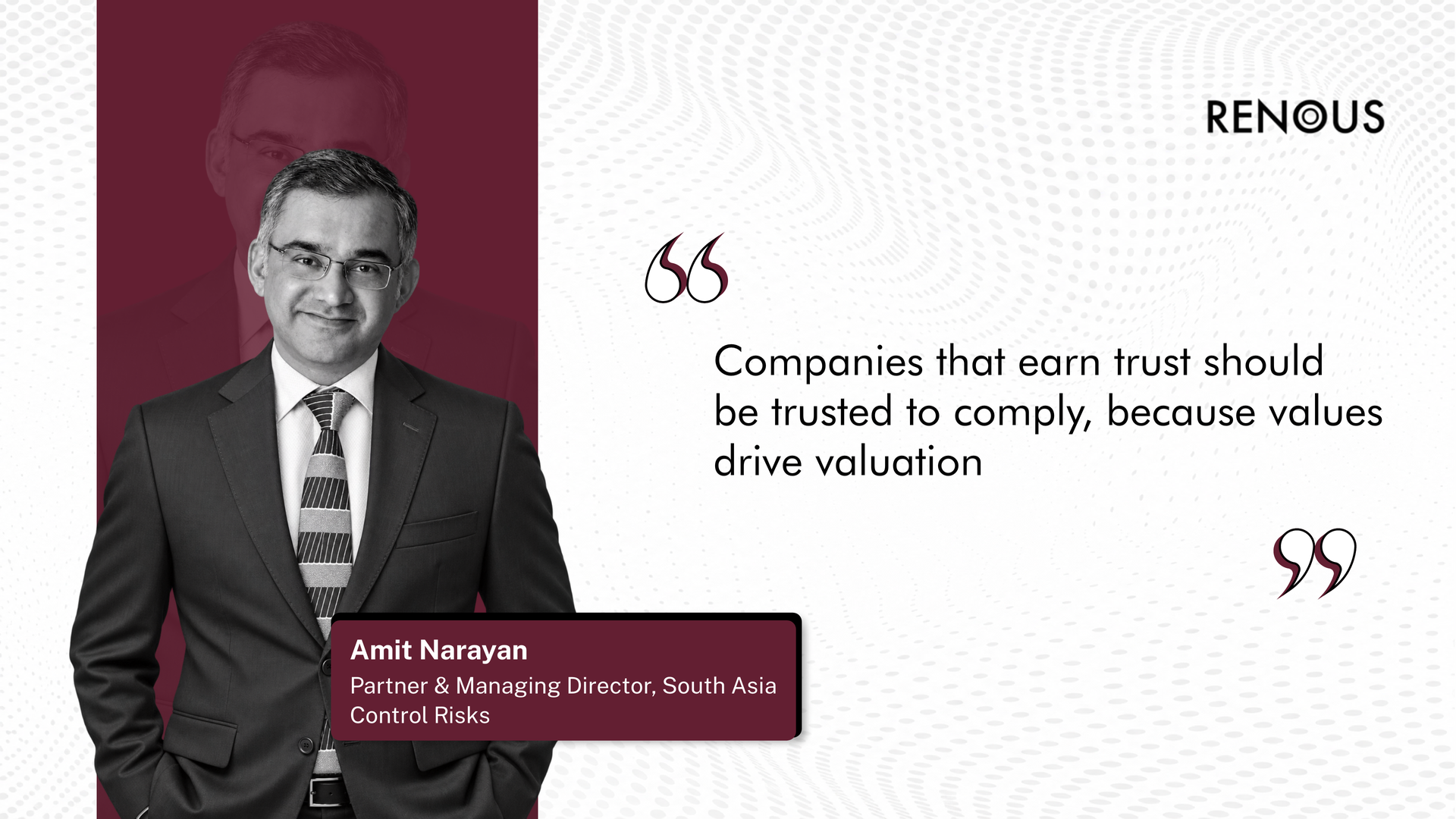
Building values drives valuations. It’s no longer about the mission and founding principles inscribed on walls, it is about understanding that authentic enterprises need solid foundations – as much as products; stakeholders need trust – as much as outcomes; and culture is not just the environment one works in - but the clarity that organizations have about their governance principles internally.
Going beyond the compliance line
It is very simple – smart and responsible decision making is now going beyond the compliance line.
In this world of work, even the regulators and government departments mandated to ensure compliance need to change tack. Just as socialist era thinking about business licensing has changed, there needs to be a transition in enforcement. Action and behavior of regulators have to become a function of this context. It has to go both ways, of course. Appropriate change in action by regulators needs to work in tandem with engagement, transparency and trust building by the corporation.
Bottom line - companies that consistently demonstrate the ideals of shared prosperity should be trusted to conform.
Regulators and law enforcement bodies, then, should be in the business of “minding the gap”. This phrase - Mind the Gap – is a standard safety request at train and metro stations across the world. In the context of business and compliance - the train is not the risk, the platform is not the risk. But it is the gap when the two come together that needs to be acknowledged and navigated.
The world of work has to be primed to recognize these “gaps”… that emerge between intent and delivery, conformance and fatigue… as well as compliance and trust.
From compliance to self-regulation
We are living through a regime shift of sorts – where mere compliance is giving way to businesses self-regulating.
This is critical to keep the pace of innovation up – imagine a world where the pace of AI model enhancements is stymied by regulation!
Rajeev Peshawaria refers to the world we live in as the Glasshouse Economy – a universe of radical transparency, where trust is a competitive advantage and maximizing good is rewarded. In the book by the same name, Rajeev speaks about the criticality of delivering economic value by integrating the needs of all stakeholders.
In such a world, profitable sustainability drives sustainable profitability… which means that we no longer need to be distrusting businesses instinctively. Doing well by doing good can also mean complying without having to be regulated.