 Vantage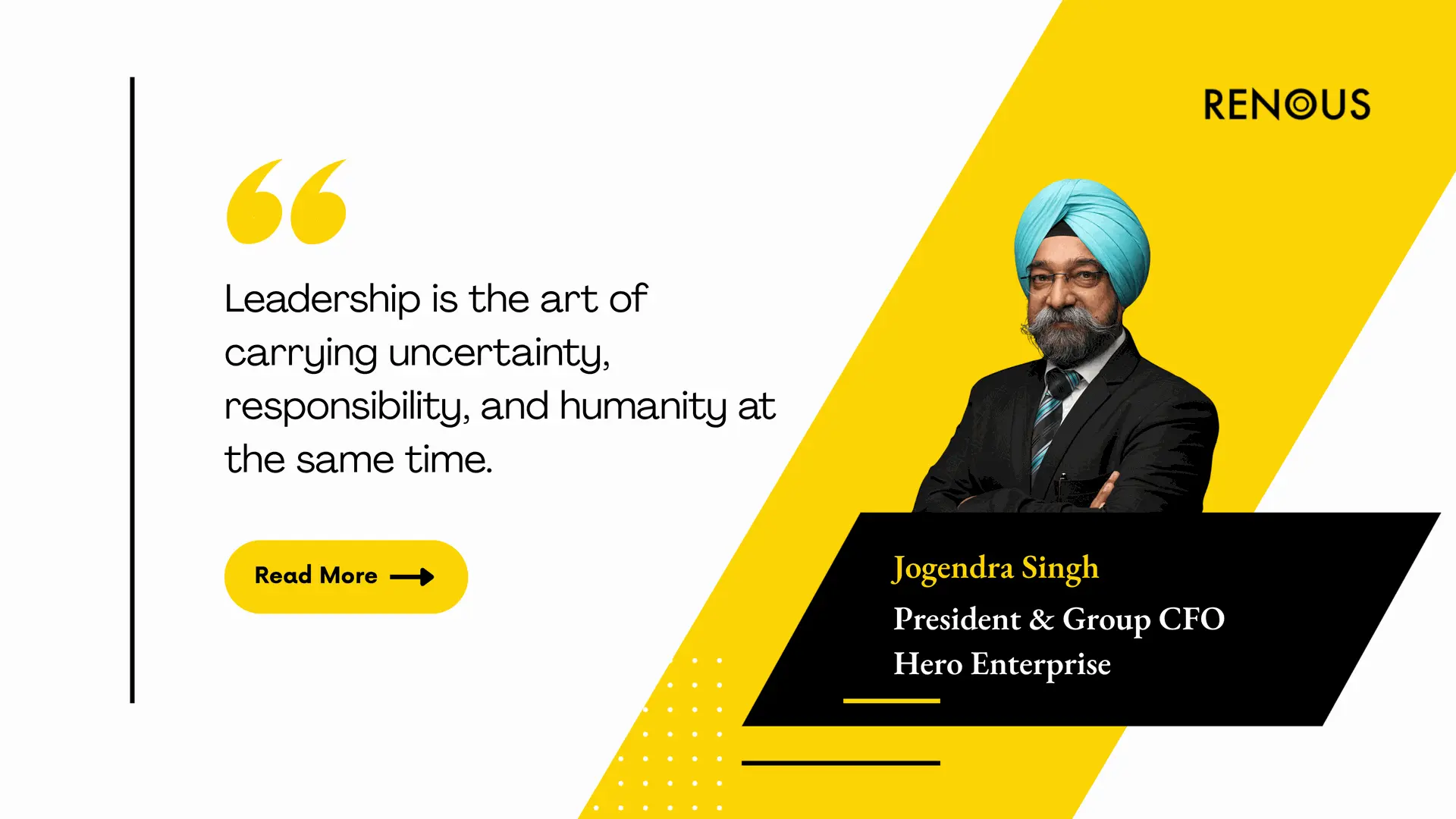
Leadership is often seen through the lens of confidence, clarity, and control. From the outside, leaders appear decisive — standing on stages, addressing employees, speaking to investors, and inspiring teams with conviction.
But leadership has another side that rarely finds its way into public speeches or annual reports.
It is the world of private thoughts. Quiet doubts. Unspoken fears. Human moments. The things leaders deeply feel but carefully choose not to say aloud.
Over time, every seasoned leader learns that leadership is not only about communication — it is also about restraint. Knowing what to say, when to say it, and sometimes, what must remain unsaid. They know- ‘Half of the art is knowing when to stop.’
सत्यं ब्रूयात् प्रियं ब्रूयात्, न ब्रूयात् सत्यमप्रियम्।”
Speak the truth, speak it gently, but do not speak truth in a manner that causes unnecessary hurt.
Leadership often lives in that delicate balance between honesty and responsibility.
“I Am Not Completely Sure”
One of the biggest myths about leadership is that leaders always know the answers.
In reality, many important decisions are made with incomplete information, uncertain outcomes, and significant risk.
Yet leaders cannot publicly appear paralyzed by uncertainty. Teams seek reassurance. Investors seek confidence. Markets reward conviction.
I once heard a respected business leader say after announcing a major expansion project:
“Everyone thought I sounded absolutely certain. Truthfully, I was still debating the decision in my own mind.”
That is the paradox of leadership. Experience teaches leaders that certainty is often an illusion, but responsibility requires decisiveness anyway.
The public sees confidence. The leader privately carries uncertainty.
Perhaps this is why the Bhagavad Gita reminds us:
“कर्मण्येवाधिकारस्ते मा फलेषु कदाचन।”
You have the right to action alone, not to the certainty of outcomes.
Wise leaders understand this deeply. They act not because outcomes are guaranteed, but because inaction is often the greater risk.
The Weight Leaders Carry Quietly
McKinsey in the article — “The Power of Vulnerability in Leadership” , says that vulnerability is not emotional exposure for its own sake — it is the ability to remain emotionally honest while still carrying responsibility. Why it matters psychologically: Leaders often experience what psychologists call emotional masking — managing their own anxiety while regulating the emotions of others
Most employees see the visible side of business — growth targets, launches, performance numbers, celebrations.
Leaders often see something else entirely: fragility.
They know how close organizations sometimes come to crisis. A delayed payment, a regulatory shift, a supply chain breakdown, the exit of a key customer, or a sudden market disruption can alter the destiny of a company.
During difficult economic periods, many leaders quietly absorb enormous emotional pressure while ensuring calmness around them.
A former CEO once admitted years later: “There were months when I hardly slept. But every morning I walked into office smiling because anxiety at the top spreads quickly.”
Leadership often requires emotional containment — carrying fear privately so others can continue working with confidence.
Rahim captured this silent strength beautifully centuries ago:
“रहिमन निज मन की व्यथा, मन ही राखो गोय।
सुनि अठिलैंहें लोग सब, बाँट न लैहें कोय॥”
Keep your pain within yourself, for the world may listen, but very few truly share the burden.
Many leaders understand this truth intimately.
The Decisions They Remember Most
Interestingly, the decisions leaders remember most are often not the ones the public remembers.
The media may celebrate acquisitions, profits, or market share victories. But many leaders privately carry memories of people, not numbers.
The employee who lost a job during restructuring. The talented manager who left because no one noticed her burnout. The loyal colleague who deserved more recognition.
Years later, leaders rarely regret quarterly numbers. They more often regret moments where empathy was missing.
“The hardest decisions were never about business. They were about people.”
Kabir perhaps understood this human dimension best:
“बड़ा हुआ तो क्या हुआ, जैसे पेड़ खजूर।
पंथी को छाया नहीं, फल लागे अति दूर॥”
What is the value of greatness; if it offers neither shade nor comfort to others?
True leadership is not measured merely by scale, but by humanity.
The Loneliness at the Top
There is another truth leaders rarely speak about openly: leadership can be lonely.
As responsibilities grow, honest conversations often reduce. People become more careful around authority. Feedback becomes filtered. Criticism becomes softer. Praise becomes more frequent than truth.
At some point, many leaders quietly begin wondering:
“Who is speaking honestly to me anymore?”
This isolation is not always visible. Leaders may be surrounded by meetings, teams, advisors, and constant communication — yet still feel profoundly alone in decision-making.
This is why wise leaders value a few people who are courageous enough to disagree with them honestly.
Not flatterers. Not admirers. But truth-tellers. Because leadership without honest feedback slowly becomes dangerous.
Why Leaders Don’t Say Everything Publicly
People often ask why leaders cannot simply “say exactly what they think.”
The answer is more nuanced than it appears.
Words from leaders carry consequences.
One careless remark can create panic inside organizations, damage morale, unsettle investors, or weaken trust externally.
Sometimes silence is not avoidance — it is responsibility.
Leaders often know things before others do: upcoming restructuring, business risks, difficult transitions, or strategic uncertainties. Speaking prematurely can create confusion before solutions are ready.
Experienced leaders therefore learn an important lesson: Not every truth helps when spoken too early. There is a Sanskrit wisdom that says:
“वाचा सत्यम्, प्रियं ब्रूयात्।”
Let speech be truthful, but also compassionate.
Restraint, in many situations, becomes a form of leadership wisdom.
The Regrets That Arrive Later
With time, many leaders begin reflecting differently on success.
In younger years, ambition dominates. Speed matters. Growth matters. Achievement matters.
But later, reflections become more personal.
Many leaders quietly acknowledge the hidden costs of success — missed family moments, neglected health, strained friendships, and years lived in constant urgency.
Age often teaches leaders that achievement alone does not create fulfilment.
When Silence Becomes Dangerous
However, not all silence is wise.
There are moments when leaders know something is wrong — unethical behavior, toxic culture, failing governance, or harmful decisions — yet delay speaking up.
History shows us that many corporate failures did not happen because leaders were unaware.
They happened because difficult truths remained unsaid for too long.
This is where leadership requires courage over comfort.
The finest leaders understand the difference between thoughtful restraint and harmful silence.
One protects institutions. The other weakens them.
As the Mahabharata reminds us:
“अधर्मेण जयन्नेव न सुखं समवाप्नुयात्।”
Victory achieved through silence toward wrongdoing never brings lasting peace.
The Most Human Truth About Leadership
An article in Psychology Today — “The Wisdom of Leadership and the Courage to Be Vulnerable”, connects leadership with emotional openness and wisdom.
The article argues that the strongest leaders are not those who suppress discomfort, but those who remain fully present despite it.
This connects beautifully with Indian philosophical traditions as well — particularly the idea of स्थितप्रज्ञ (equanimity amidst uncertainty).
At its heart, leadership is far more human than most people imagine.
Leaders are not machines programmed with certainty and strength. They are individuals navigating pressure, ambiguity, responsibility, expectations, and consequences — often while hiding their own fears.
“As someone once said -- the privilege of a lifetime is to become who you truly are.”
Many leaders spend years becoming what organizations need them to be — while privately struggling to remain emotionally authentic.
That tension, perhaps, lies at the heart of The Unsaid, The invisible, The deeply human.
About Author
Jogendra Singh is President & Group CFO and Board Member of Hero Enterprise which includes companies engaged in Steel Manufacturing, Real Estate, Insurance Broking operations, Not for Profit Foundations and Investment Office.
Jogendra Singh was the 1st Employee and Chief Accounting Officer for Daimler India Commercial Vehicles P Ltd, makers of Bharat Benz Trucks and Buses responsible for Finance, taxation, and External Affairs.
He has been Guest Faculty to various MBA Institutes including ISB, IIM Lucknow, IIM Indore, IIM Sambalpur, IIT Dharwad, IMT, Pokhra University, among others.
He was featured as of the Most Influential Punjabis of the by Intellectual Punjabi Chamber of Commerce, New Delhi in 2020 and 2023 and by PTC, Globally the largest Punjabi TV Channel in 2024.
He was awarded Honorary Doctorate by University of Entrepreneurship & Technology, UET, USA.
He has interest in the creative fields and is author, an accomplished Singer and writes Hindi poetry.
Find him on LinkedIn: Jogendra Singh
Disclaimer from Renous
The opinions expressed in this article are those of the guest author and do not necessarily reflect the views of our publication. The information provided in this article is for general informational purposes only and should not be considered as professional advice. The reader should always conduct their own research and due diligence before taking any action based on the information provided in this article.